
Creating Real Business Value with AI Requires More Than Powerful Models
- ZHENYUN Technology Chairman Wang Pei
ZHENYUN Technology Chairman Wang Pei: Creating Real Business Value with AI Requires More Than Powerful Models
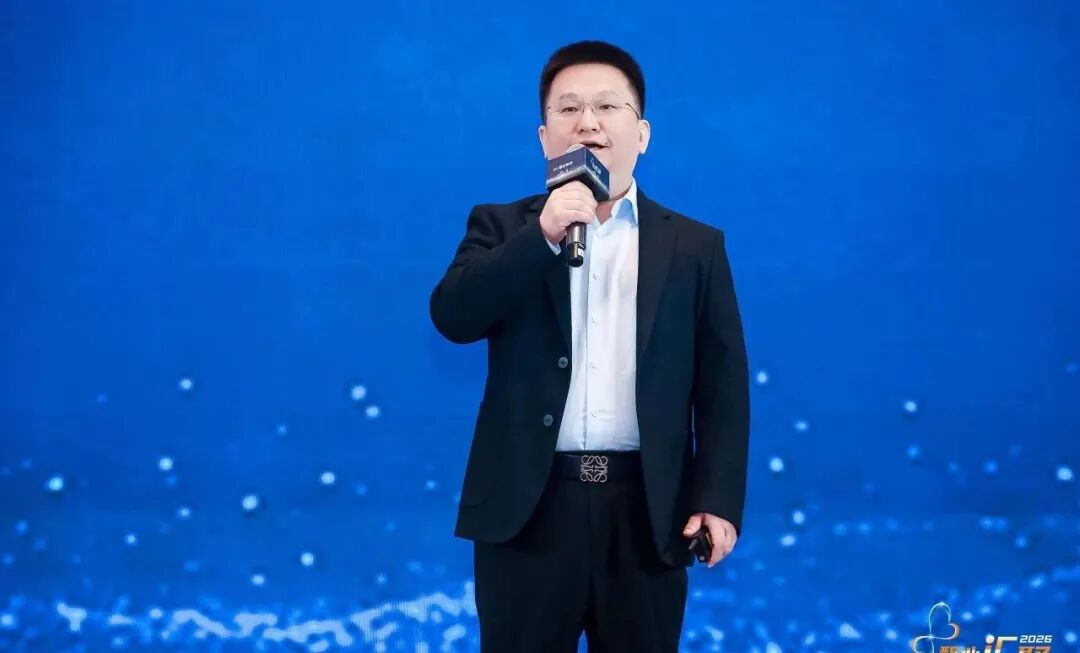
At the ZHENYUN 2026 User Conference, ZHENYUN Technology introduced Tiangong & Kaiwu, a dual AI platform integrating product capabilities and delivery tools to help enterprises deploy AI in real-world procurement scenarios.
“Whether AI can truly create value for an enterprise is not simply a matter of whether business requirements can be met, nor is it entirely determined by the capabilities of large language models,” said Wang Pei, Chairman of ZHENYUN Technology, at the company’s 2026 User Conference.
The current wave of AI innovation has been driven by breakthroughs in large language models. Much of the market discussion continues to focus on model providers such as DeepSeek, OpenAI and Anthropic, covering their capital investment, model releases and AI agent applications. Against this backdrop, Wang’s remarks offer a different perspective—one that shifts the focus from model performance to business value.
He explained that the key challenges often emerge during implementation: Is enterprise data accurate and usable? Do existing systems need to be upgraded or integrated? Who makes the final decisions? If these practical questions remain unresolved, even the most advanced AI applications may fail to deliver their expected results.
Wang was not downplaying the importance of large language models. Rather, he emphasized that AI creates genuine value only when it is embedded in business scenarios and operational workflows. This brings into focus one of the most important questions in enterprise AI today: how to bridge the “last mile” between AI technology and real business operations.
Growing demand for forward-deployed engineers, or FDEs, reflects the scale of this challenge. According to labor market analytics firm Lightcast, fewer than 200 FDE job advertisements were posted in the United States in 2023. In the first three quarters of 2026, the number exceeded 7,300—an increase of more than 30-fold. Separate domestic data showed that FDE-related job postings in China surged 21-fold year on year in the first half of 2026.
Commercial deployment is therefore becoming a defining theme in the next stage of AI development. As one of China’s leading digital and intelligent transformation service providers, ZHENYUN Technology was an early pioneer of SaaS-based procurement platforms. At the conference, the company unveiled Tiangong & Kaiwu, its AI product and service platform for procurement, representing its latest effort to help enterprises put AI into practical operation.
Why Enterprise AI Projects Stall
At the conference, Gong Xunwei, Founder and Chief Expert of Zhongcai Business School, described a growing problem: some enterprises invest heavily in AI tools, only to find that they cannot be deployed effectively. The projects are eventually abandoned, leaving behind what he called “unfinished AI initiatives.”
He identified four common causes: unstable AI outputs, unusable data, the mistaken assumption that a successful demonstration guarantees production readiness, and a failure to integrate AI into business processes. In real enterprise environments, however, the barriers can be even more complex.
A digital transformation leader from a chemical company noted that AI implementation begins with data aggregation, cleansing, training and annotation. This work requires both dedicated personnel and substantial investment, creating difficulties before AI applications can even reach the deployment stage.
A procurement executive from a logistics group offered another example from the e-commerce procurement of indirect materials. Suppliers often use different product fields for the same category: some provide color, model and specifications, while others provide only a model number. These inconsistencies make it difficult for AI to conduct reliable price comparisons.
Data governance is only part of the challenge. Standards and organizational structures also matter. A representative from a new materials company explained that the same material might be classified as a primary material at one subsidiary, an auxiliary material at another and a fixed asset at a third. For a group with dozens of production sites and subsidiaries, material management therefore requires unified planning before AI can be introduced effectively.
An IT leader from a food company went further, arguing that AI should not be treated as a stand-alone tool. Enterprises need an organizational structure that supports it, including business expertise, the integration of fragmented information and process redesign. In this sense, organizational capability can matter more than the AI technology itself.
People are another critical factor. A pharmaceutical industry representative noted that even after AI applications had been successfully introduced into procurement, questions remained about the buyer’s role: should procurement professionals continue to act primarily as executors, or should they become builders and operators of intelligent systems? A procurement leader from the agriculture and animal husbandry sector also observed that some employees had been reassigned to other roles following AI deployment.
System integration, data governance, common standards, organizational alignment, sufficient budgets and effective human-AI collaboration must all be addressed. Introducing AI is therefore not simply a technology purchase—it is a company-wide transformation.
A Transformation Enterprises Cannot Afford to Delay
Despite these challenges, digital and intelligent transformation remains an imperative for enterprises.
From early IT system implementation to the adoption of big data and cloud computing, cost reduction and efficiency improvement have long been the shared objectives of enterprise digitalization. In the AI era, however, a broader and more complex set of requirements is driving transformation.
A digitalization leader from a leading pharmaceutical and healthcare company noted at the conference that industrial competition is shifting away from product scale alone toward innovative manufacturing and supply chain resilience. Procurement, meanwhile, is evolving from transaction execution toward value collaboration. As a result, resilient, autonomous and intelligent supply chains are becoming a new foundation for competitiveness.
Changing market demand is also requiring pharmaceutical and healthcare companies to respond faster while maintaining stable delivery. Another pharmaceutical executive highlighted the pressures created by innovation and regulation. From early-stage research and clinical development to overseas commercialization, new pharmaceutical products require extensive quality and document traceability. At the same time, lengthy sourcing cycles can directly delay the development of innovative medicines.
“Policy requirements, compliance pressures, supply challenges and specific business pain points are all driving our digital and intelligent transformation,” the first executive said. “AI-powered procurement is moving toward being trustworthy, verifiable and auditable. When knowledge, data, permissions and human review enable AI to collaborate within a controlled framework, it can create genuine value.”
Similar pressures are emerging in other industries. The CIO of a leading automotive parts company explained that vehicle manufacturers require comprehensive quality traceability. When a quality issue occurs, enterprises must be able to determine quickly and accurately whether it originated in the supply chain, then identify and isolate the affected components. At the same time, the rapid upgrade cycle of new energy vehicles is placing greater demands on procurement efficiency.
A representative from a pet food company noted that traceability is a key feature of the company’s mid-range and premium products. With operations spanning global markets, supplier audits alone must address laws and regulations, food safety requirements, customs policies and EU standards, creating an enormous workload.
These examples demonstrate why enterprises need more than isolated AI tools. They need technologies and applications that can evolve alongside increasingly complex business requirements.
Combining Technology with Business Expertise
ZHENYUN Technology’s team has more than two decades of experience in digital and intelligent procurement. The company has served more than 1,000 enterprise customers across over 30 industries, accumulating extensive technical and business expertise.
At the conference, ZHENYUN officially introduced Tiangong & Kaiwu, a dual AI platform combining products and services. Tiangong provides the platform’s AI capabilities, while Kaiwu supplies AI implementation and delivery tools. More than 20 AI products—including intelligent review, intelligent contract management and intelligent order conversion—were also presented as a complete portfolio for the first time.
At the architectural level, ZHENYUN has developed an AI enablement platform that connects with commercial, open-source and privately deployed models while remaining compatible with multiple application engineering frameworks.
“Large models determine the ceiling of AI applications, while the application engineering system determines the floor of real-world deployment,” said Wu Jian, Head of ZHENYUN Technology’s Product R&D Center.
According to Wu, ZHENYUN developed its own AI platform to ensure that AI agents can integrate seamlessly with standard product functions. The objective is not to attach AI as an external add-on, but to build genuinely AI-native capabilities. For enterprises, the platform supports the low-code development of customized agents while enabling proprietary business knowledge to be captured, retained and reused.
ZHENYUN’s approach to customer collaboration also goes beyond conventional product sales and system implementation. The company adopts a co-creation model, working with enterprises to develop solutions around their actual business needs.
Expertise accumulated across years of industry projects can be refined, structured and reused across companies and sectors. Selected business knowledge and rules have already been embedded into ZHENYUN’s AI product and service system—an advantage that a technology provider without deep procurement expertise would find difficult to replicate.
Through its collaboration with 3SBio, for example, ZHENYUN successfully helped bring an intelligent review application into operation. Its co-creation with Huabao Group also led to a cost analysis project. The solution uses AI to derive cost structures, while an intelligent price comparison assistant combines multiple internal and external information sources to generate price reports automatically. Together, these capabilities create a closed loop covering cost analysis, price comparison, price validation and post-project review.
AI continues to command significant market attention, but the conversation surrounding large language models is beginning to change. Beyond capital expenditure and technical benchmarks, the market is increasingly focused on commercial deployment and measurable returns. Companies such as ZHENYUN Technology serve as a bridge between AI innovation and enterprise applications.
As Yao Yiming, President of ZHENYUN Technology, concluded: “Rooting ourselves in real-world scenarios, starting from business needs and exploring how AI can be integrated with procurement—this is what we are committed to doing.”


